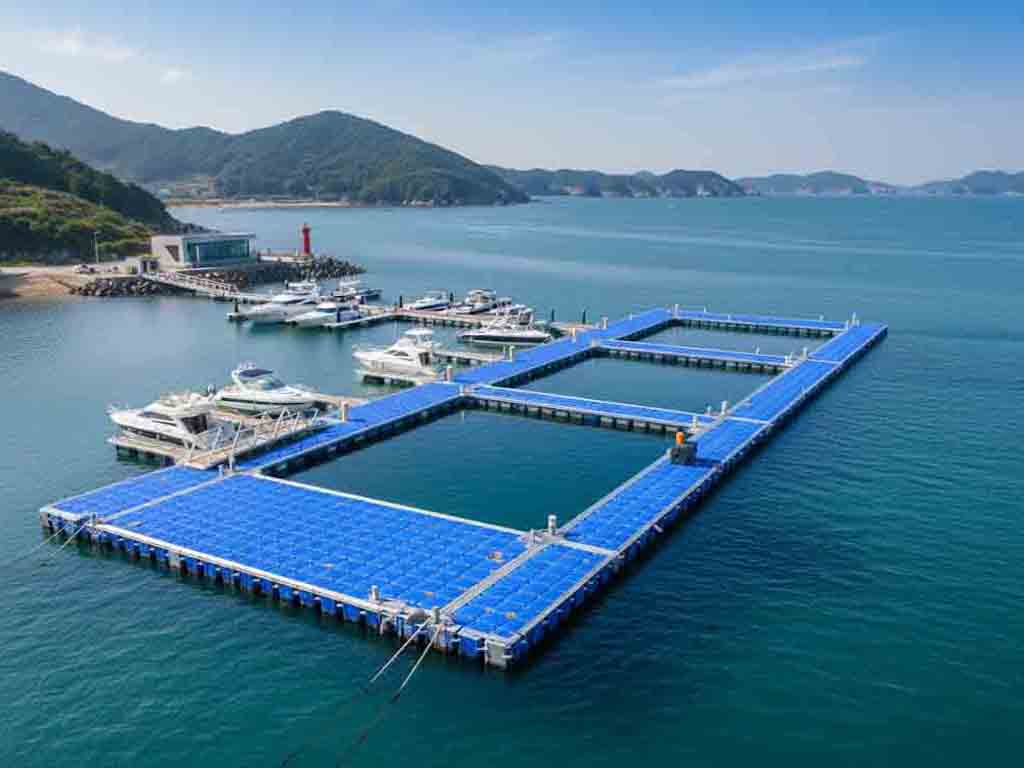
Floating dock platforms are transforming the waterfront industry by providing flexible, efficient, and sustainable floating dock platforms for modern operations. Their modular design, durability, and adaptability make them the preferred solution for operators seeking flexible and low-maintenance options that operate reliably in a variety of water conditions and environments.
What Is a Floating Dock Platform?
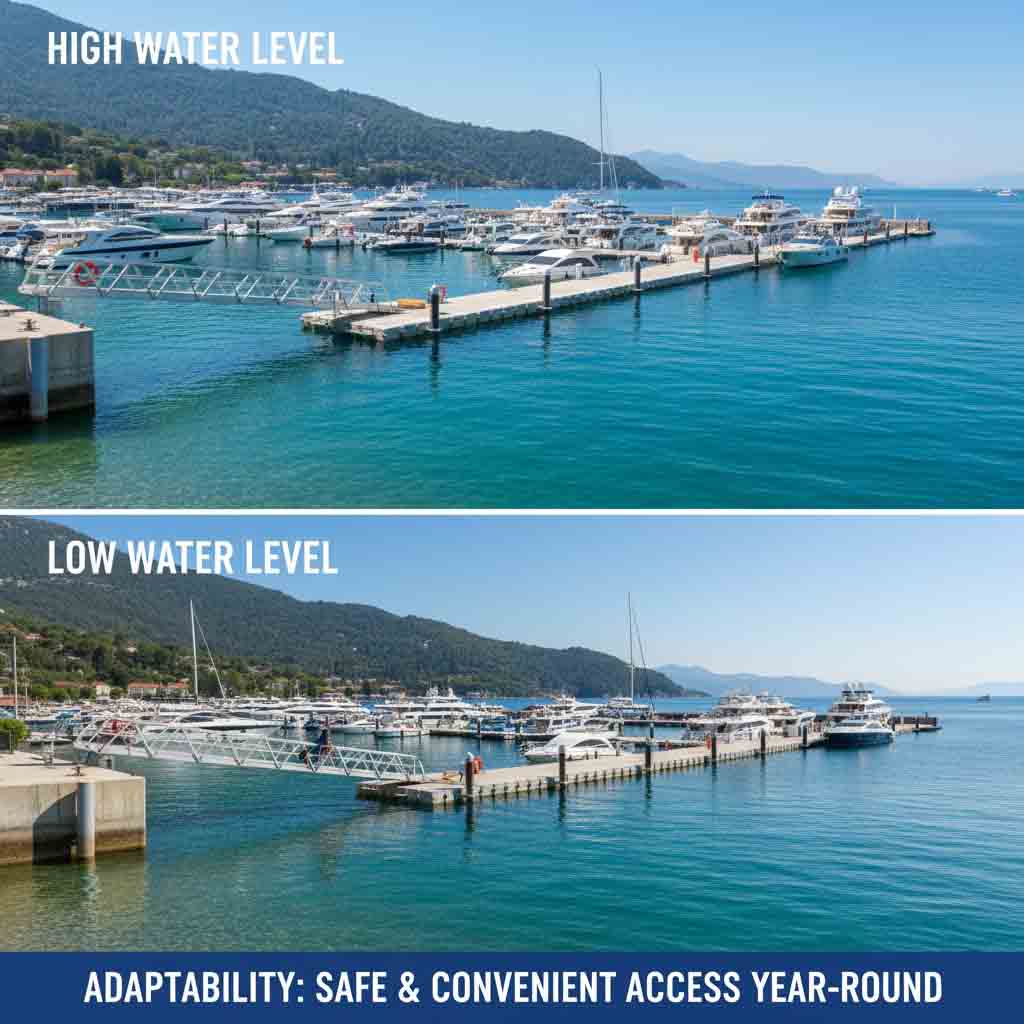
Manufacturers design floating dock platforms as modular systems built for long-term reliability on the water’s surface. Made up of durable dock blocks, it provides stable access to marinas, aquaculture, and waterfront projects. Common materials include HDPE (lightweight, corrosion-resistant), aluminum (durable, low-maintenance), and steel (heavy-duty, high load capacity). Moreover, floating dock platforms rise and fall with the water, unlike fixed docks, for stable and reliable performance. This makes them useful in coastal, river, and lake areas.
| Feature | Floating Dock Platform | Fixed Dock |
|---|---|---|
| Water Level Adaptation | Excellent | Limited |
| Installation | Quick, modular | Complex |
| Maintenance | Low | Higher |
| Durability | Material-dependent | High |
Floating Dock Applications in Marinas
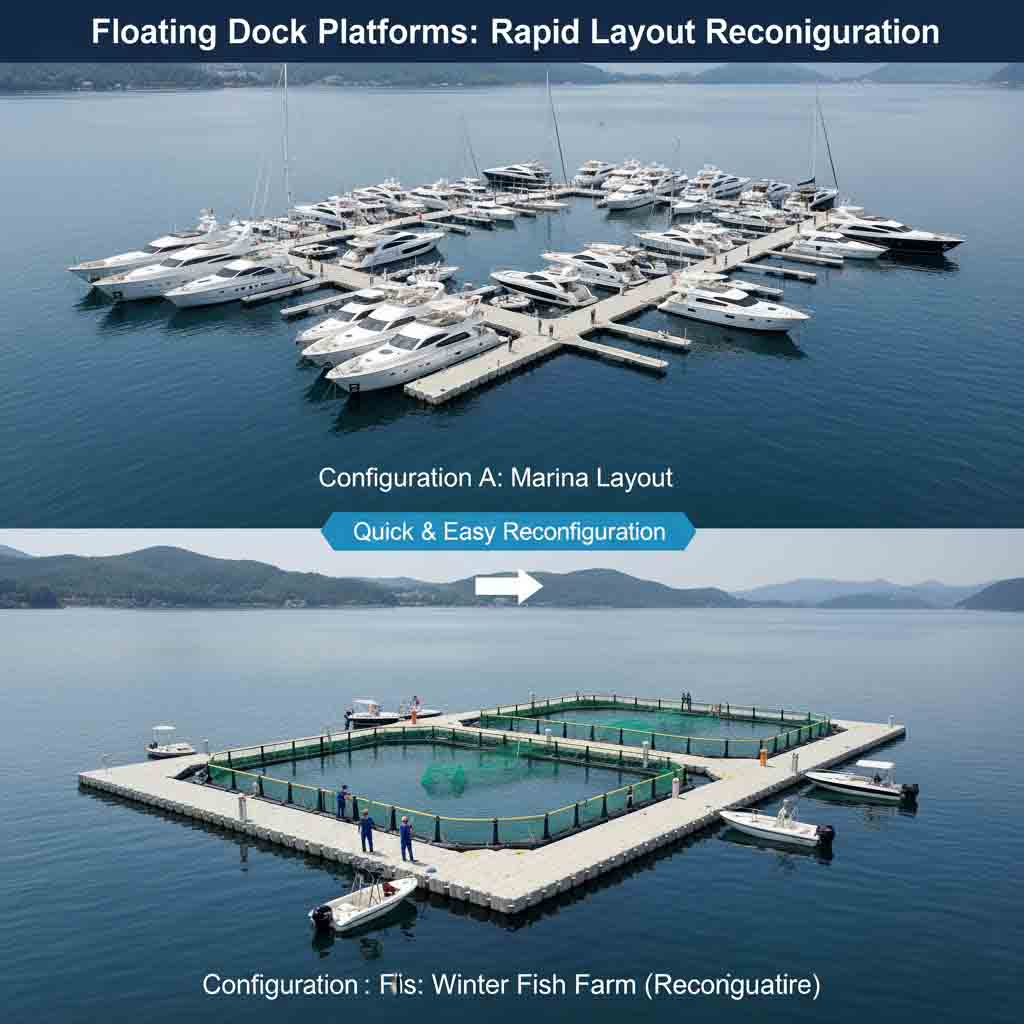
Marinas utilize floating dock platforms to enhance berthing capacity and offer fuel stations. The modular design of floating dock platforms allows operators to quickly reconfigure the layouts to adapt to seasonal demands or vessel sizes. These marina projects have demonstrated how modular floating docks can enhance berth efficiency and minimize maintenance downtime.
Floating Dock Applications in Fish Farms
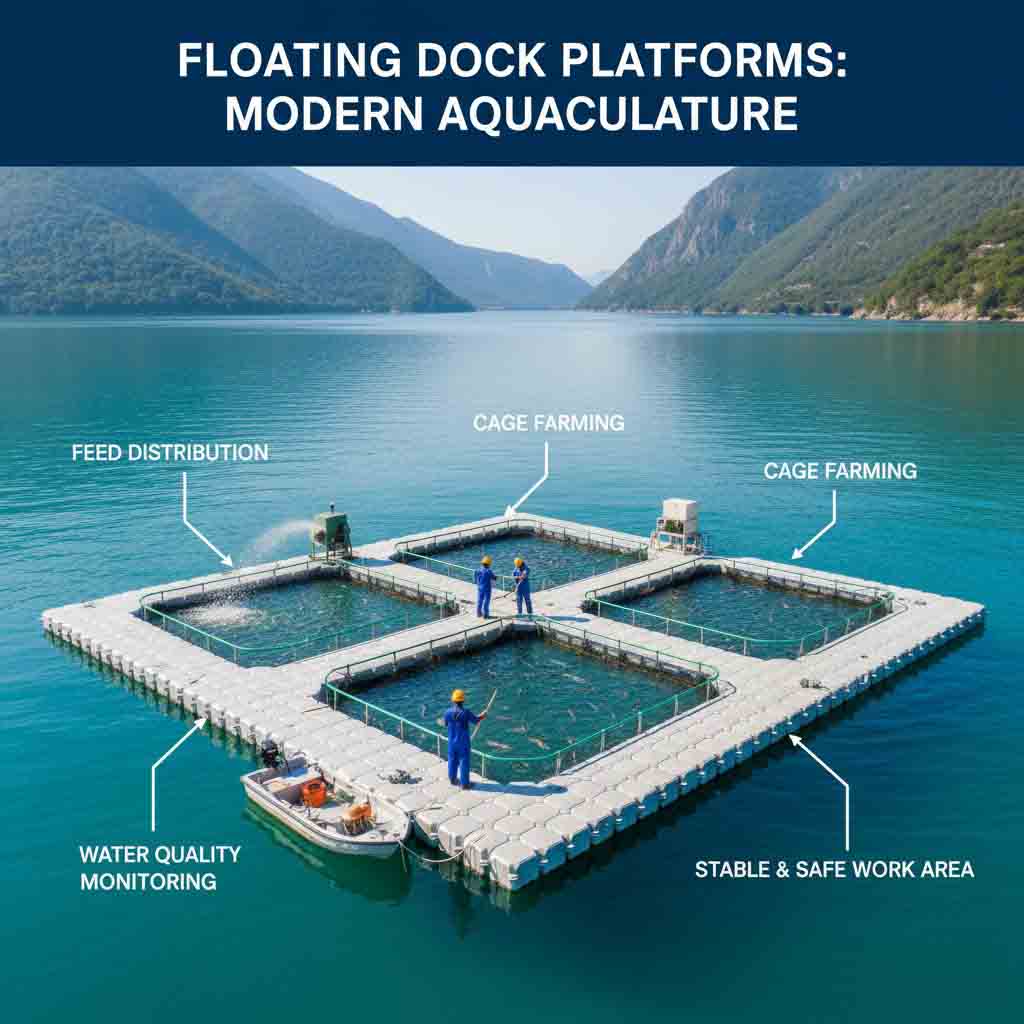
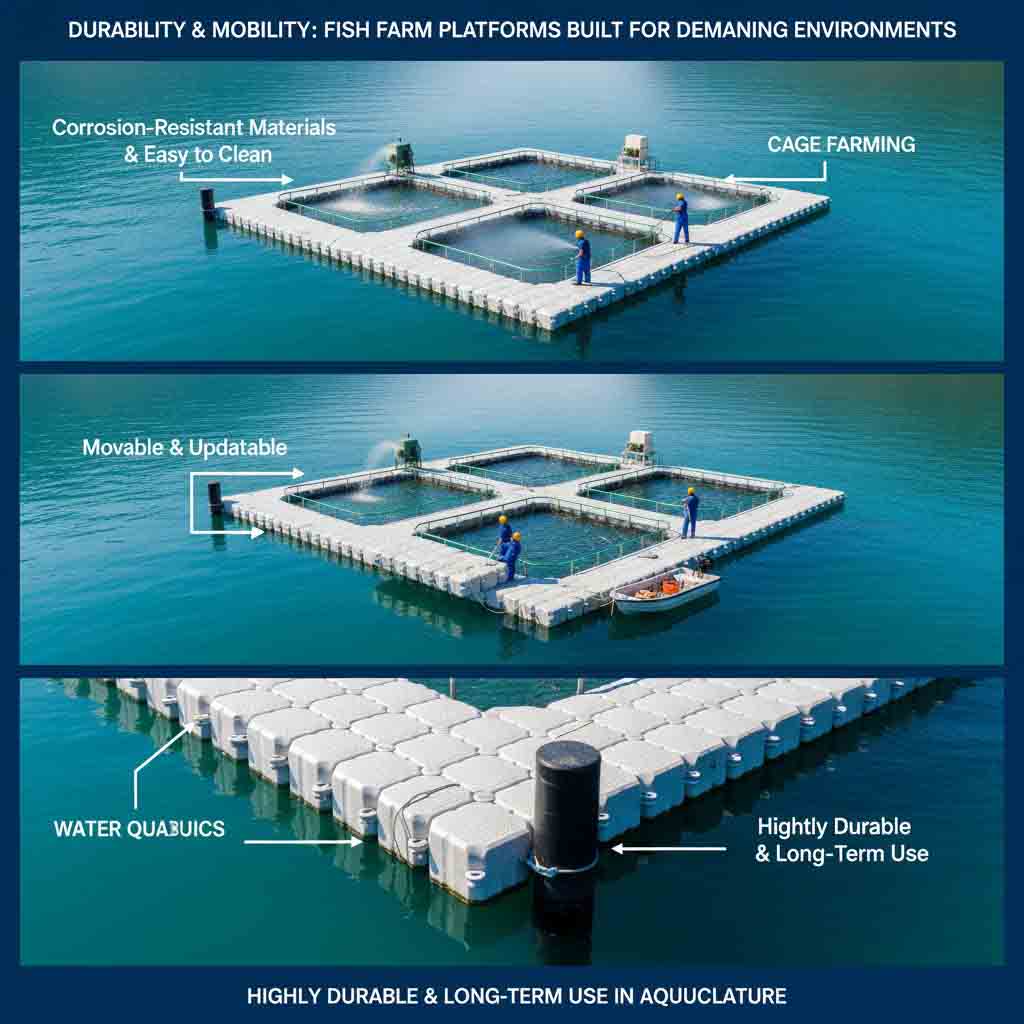
The floating dock platform is an essential part of modern aquaculture. Made of corrosion-resistant materials, these platforms are highly durable and provide stable and safe work areas for farmers. As a result, users choose floating dock platforms for cage farming, feed distribution, and water-quality monitoring, since these platforms clean easily, move quickly, and last long. Check out our custom fish farming system solutions
Floating Dock Platform Comparison Table
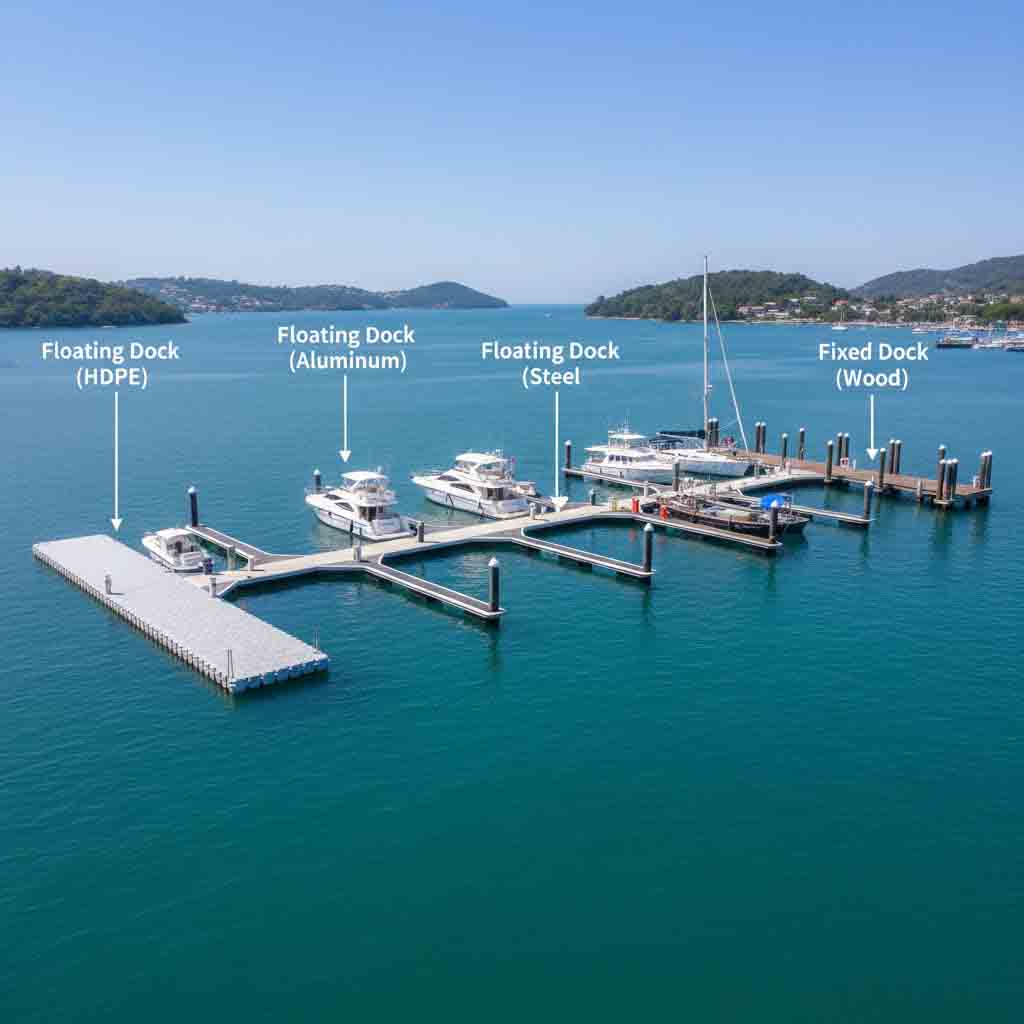
| Feature / Type | Floating Dock (HDPE) | Floating Dock (Aluminum) | Floating Dock (Steel) | Fixed Dock (Concrete/Wood) |
|---|---|---|---|---|
| Typical Applications | Fish farms, light marinas, recreation | Marinas, resorts, mixed-use docks | Heavy-duty marinas, industrial sites | Permanent waterfront structures |
| Load Capacity | Light to medium | Medium to high | Very high | High |
| Wave Resistance | Moderate (calm to mild waters) | Good (moderate waters) | Excellent (harsh waters) | Excellent (but rigid, less flexible) |
| Maintenance Frequency | Very low (UV & corrosion resistant) | Low (minimal corrosion) | Medium (requires anti-rust treatment) | Medium to high (wood rot, concrete cracks) |
| Cost | Low to medium | Medium | High | High (construction-intensive) |
Installation and Maintenance Tips
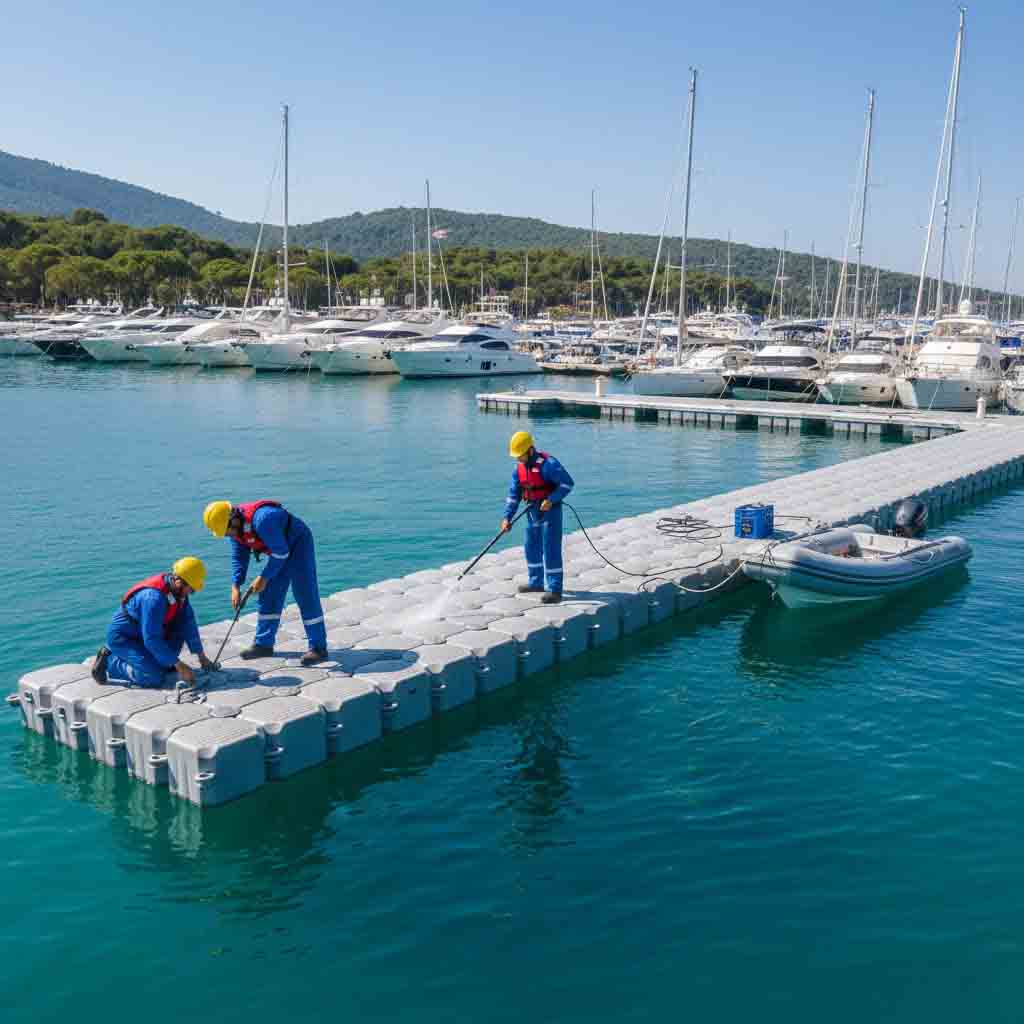
To make sure your dock platform goes in smoothly, start out with water conditions that aren’t going to be a problem & have a clear plan of what you’re laying out. Make sure to lock each dock block or pontoon firmly and align it straight to create a solid, level base. With a bit of routine maintenance, your floating dock should stay stable, safe & ready to go no matter where you put it. Here are guidelines on how to install and maintain your docks
Choosing the Right Platform for Your Needs
Every project is a bit different, which means you’ll need a solution that meets your specific demands. Once you’ve built up an ideal platform that fits all your needs, you’ll get the best value for your money & the most out of it over the long term.
Get a free consultation to start your project?
Discover the right floating dock solution for your marina or fish farm today—contact our team for expert guidance, tailored designs